For Men Only: Getting to Paris

Ever wonder why women the world over often dream of French men? Because they have an air about them. From the tops of their heads to their well-cut pants to their polished, non-sneaker shoes, they’re confident, put together, ready for anything. In other words: they have a sense of style, and they wear it with confidence.

The essence of men's French style: sleek lines, good quality, good grooming. Even an unshaven look has a style about it on French men.

The essence of men’s French style: sleek lines, good quality clothing, good grooming. Even an unshaven look has a style about it on French men.

If there’s one situation that many men lack confidence in, it’s packing for a European trip; otherwise, why would there be so many suggested packing lists available on the internet? My travel experience has taught me would-be travelers concentrate too much on following someone else’s packing list instead of formulating their own. You have to pack for you — your habits, your needs, and what you plan to do while in Paris: in other words, you should pack from the inside out — while taking in consideration you’ll be in a foreign country where men are, for the most part, well-groomed and well-dressed.

What do I mean by packing from the inside out? Let’s focus first on your toiletries and personal items. What do you use every day? Write down which personal items you use from the time you wake up until you go out the door: brush/comb, shampoo, body soap, washcloth or similar item in the shower, razor, shave cream, after shave, cologne, toothbrush, toothpaste, floss, deodorant, blow dryer (with a 2-round-pin adapter for France). Occasionally you cut yourself shaving, so add band-aids and Neosporin to your list. Do you get a sore on your foot from time to time? Add whatever you use for that. Do you use any other products on an occasional basis that you wouldn’t want to live without? Add them to the list. While many grocery and large-chain drug stores have a travel section for personal products, here are two resources for products:  AllTravelSizes.com and Sephora Sets for Men.

Let’s assume you’re going to Paris for a week in the fall with a friend. Talk about what the two of you plan to do together before you pack: You’ll want your wardrobe to be in-sync with your friend’s. (Okay, guys, I’m not suggesting you tell your friend why you’re asking. Just find out nonchalantly.) After all, if your friend wants to take a dinner cruise on the Seine River (or eat at any nice restaurant), you’ll want to be properly dressed: most fine cuisine restaurants in Paris still require men to wear a jacket and tie. Say you’re planning to sight-see (think: lots of walking), visit the Eiffel Tower and other attractions, a dinner cruise, a trip to Versailles. You’ll need a good pair of walking shoes but not tennis shoes: GQ recommends rubber sole shoes by John Lobb, but since they can cost as much as air fare (or more), check out the rubber sole loafers available at Zappos. 

To help you understand what clothes to bring, I recommend tracking trending weather conditions there for 2 weeks prior to your trip. For the record, temperatures in Paris average 61 degrees Fahrenheit (16 degrees Celsius) in September, and 54 degrees Fahrenheit (12 degrees Celsius) in October: cool but not cold. Layering is your best strategy in case it gets significantly warmer or colder than average. This means take 2-3 short-sleeved shirts, 2-3 long-sleeved shirts, 2-3 V-neck sweaters, 1-2 dress shirts (even better: shirts made to order by Proper Cloth), a wind-breaker, a heavier jacket (take this with you on the plane), a scarf. For evening, you’ll need a pair of dress pants (you’re on your own; they should fit well and be wrinkle-resistant). For sightseeing, I recommend pickpocket-proof pants from Clothing Arts or Bluff Works (being mindful the color you order works with your shirts and sweaters). Add to this list accessories: dress belt, underwear, socks, and cuff links if you plan to be really dressy. (You’ll fit right in.)

Don’t forget your technological needs, such as your smartphone charger and ear buds. Think twice before taking your laptop: unless you absolutely have to have it for work, leave it at home.

The best packing list for men traveling to Europe I’ve seen is this one from Ken’s Travel Tips. In case you like lists. Also, see GQ’s 8 Best Items for Traveling Light.

Hartmann Expandable Spinner in Olive.

Hartmann Expandable Spinner in Olive.

For a suitcase, I will always love Hartmann luggage because of how well the luggage is made and their lifetime guarantee; my favorite is the Hartmann Expandable Spinner in Olive. Whatever you purchase, do yourself a favor and buy anything except black luggage. Why? Because everyone buys black luggage. When I came back from Kazakhstan some time ago, two of my four bags went missing (the tags were ripped off); Delta Airlines told me the only reason I got them back was because they stood out in their warehouse. The Delta employee told me: “You should see our warehouse…it’s nothing but a sea of black luggage.” Sure, black is sophisticated and under-stated; but if it goes missing, you might not see it again. Purchasing luggage in a color that will stand out from everyone else’s black luggage is almost as good as buying travel insurance.

Vacuuming out air of a travel bag sounds good, but where will you find a vacuum for your return trip?

Vacuuming out air of a travel bag sounds good, but where will you find a vacuum for your return trip?

If you pack right, you’ll be able to get more in your suitcase than you think. I use travel-size Ziploc bags to conserve on space. I don’t like the “envelopes” that you put several items in because I don’t find they conserve space, and I don’t recommend the bags that you vacuum air out of because…where will you find a vacuum for your return trip? Ziploc bags also protect your clothes in case your bags are searched: TSA agents can shake them to their hearts’ content, and your socks and underwear won’t fall to the ground and mop up the floor. Put items you will wear together in one bag, zip the bag three-quarters of the way, then roll the bag to extinguish the air.

You’ll want to be your best self in Paris. With a little help from experts, you’ll do just that.


Bon voyage!


All images except Hartmann Spinner from CanStockPhoto. Hartmann Spinner from Hartmann.com, CCBY 2.0.

Author’s note: The model pictured is of Indian descent and exhibits a Frenchman’s style perfectly.

Packing from the inside out is adapted from “Organizing From the Inside Out,” by Julie Morganstern.

For Men Only: The Perfect French Woman: Myth or Not?

French women know one can go far with a great haircut, a bottle of champagne, and a divine perfume.

–Mireille Guiliano, author of “French Women Don’t Get Fat: The Secret of Eating for Pleasure”

If a French woman is the quintessential woman, Catherine Deneuve was the quintessential French woman for her generation.

If a French woman is the quintessential woman, Catherine Deneuve is the quintessential French woman for her generation.

Source: The Myth of the Perfect French Woman isn’t New, but it’s Not Getting Old Either – French Morning

French women are viewed by many as the quintessential model for women: elegant, classy, thin, mysterious. Ever wonder where this view started? According to a lecturer at La Sorbonne, it all started at the 1900 World’s Fair in Paris (“Exposition Universelle”). The Fair showed off many French technological achievements — the Grande Roue de Paris Ferris Wheel, escalators, and talking films, to name a few — but the first thing visitors to Paris saw at that time was an effigy of a French woman, wearing fashionable clothes and an ‘insouciant’ attitude. She appeared on the scene at the precise moment when French businesses needed a unique way to market their products (though I’m not saying they were conscious of this need). Virtually overnight, a star was born: the image was used to promote French fashion and beauty and luxury products. To own these products was to be as beautiful and remote as that 1900 image. French fashion and beauty products, and by extension, French women, became synonymous with style, elegance, class.

Coco Chanel's influence in French haute couture is unparalleled.

Coco Chanel’s influence on French haute couture is unparalleled.

Coco Chanel (1883-1971) was 17 years old at the time of the 1900 World’s Fair. Like all French women (and men, for that matter), she would have seen how this beautiful, fashionable, non-chalant image was a driving force in French culture. She certainly wanted to be on the inside of this force rather than outside looking in, but having been born into poverty, she either had to marry well or make her own fortune. Having learned to sew while living in an orphanage, she started work as a seamstress, and eventually opened her own millinery shop. Her business took off when an actress of the time wore her hats in the play Bel Ami in 1912.

We’ll never know if it was the ‘insouciant’ attitude that influenced her early designs, but whatever it was, she made jaws drop by designing elegant, casual clothes in fabric previously reserved for men only. Casual clothes? Pants! A revelation for women at the time. She went on to design suits, “the little black dress,” handbags, and perfume, her most famous being Chanel No. 5. (You know the story, don’t you? The 5th formula that the designers presented her with was the one she liked; Chanel No. 5 is now the world’s best selling perfume.) Coco Chanel may not be the first French designer to design perfume — but she perfected it.

Today, Marion Cotillard carries the torch of the quintessential French woman.

Today, Marion Cotillard carries the torch of the quintessential French woman.

With this as background, French Morning reports that La Sorbonne offers a course during the summer months on the myth and reality of idealizing French women. What do you think? Do you think French women have an edge over all others? I can only say this: When I was last in Paris and walking along the Champs-Elysees, this well-dressed young French woman walked by, and every male head in a 5-meter radius whipped their head around to take a look. Many American women think men don’t appreciate feminine women; my experience says otherwise.

Something to think about the next time you meet a woman who has that…certain something…that je ne sais quoi (“I do not know what”) that holds your attention.


Au revoir!


Image of Catherine Deneuve in a 1979 ad for Chanel No. 5 by Classic Film, Flickr, CCBY 2.0. Image of Coco Chanel by Hto2008, Flickr, CCBY 2.0. Image of Marion Cotillard by Studio Harcourt, Wikimedia Commons, CCBY 3.0.

Reference: “Exposition Universelle, 1900” by Wikipedia, CCBY 3.0.

Destination Wedding in Paris: The Ceremony Venue

For most foreign couples who marry in Paris, it’s symbolic — a “re-wedding” for memories, with the legal ceremony already behind them.  This means the venue possibilities for your ceremony in Paris are (almost) endless.

Raph & John held their wedding ceremony at the Synagogue de Tournelles.

Raph & John held their wedding ceremony at the Synagogue de Tournelles.

While I won’t swear on it, this is likely the last time this series I will mention this: Unless you establish temporary residency by living in Paris for 40 consecutive days, and can provide documentation of this to the city hall, you can’t legally marry in France if a foreigner. In addition, France only legally recognizes wedding ceremonies at city halls; all ceremonies in houses of worship, even for French citizens, are therefore symbolic.

When selecting a ceremony venue, keep in mind the following:
a. Your choice of ceremony venue will have a direct impact on the atmosphere of your entire wedding day (formal, casual, or something in-between).
b. Number of guests it will accommodate.
c. Proximity to your hotel (and guests’, if different) and the reception venue (if different).
d. How will people be getting there? Paris is plentiful in metro stations, but parking…not so much. If everyone is staying in the same hotel, consider renting a coach (bus) to transport everyone.
e. Provide your guests with a map that includes written directions to the ceremony venue, regardless of transportation provided. Suppose someone had a last-minute detail they needed to attend to, and then didn’t know how to get to the ceremony? Also, while it is said that in Paris, you are never more than 10 minutes’ walking distance to a metro stop, you don’t want your guests stressed about feeling lost when they arrive at your ceremony.
f. If you select and are accepted by a house of worship, be sure to ask about their restrictions, especially regarding decorations and dress. Two examples: Not all venues allow confetti, and some houses of worship require women to have their shoulders covered, so an off-the-shoulder wedding dress would not be appropriate.

The groom and his men need a place at the ceremony venue for last-minute preparations as much as a bride and her attendants.

The groom and his men need a place at the ceremony venue for last-minute preparations as much as the bride and her attendants.

g. Everyone knows the bride likes to have a room for her and her bridesmaids to prepare to walk down the aisle; not everyone understands the groom and his men need one, too. Do you really want the guys to have to straighten their ties and tuck their shirts in in front of guests and vendors?
h. If you hold your ceremony outside in a public place, traffic and tourists walking by will be part of the charm. Be prepared for interesting sites!

So, where to have your wedding ceremony in Paris? Here are three ideas.

1. House of Worship
You can have a symbolic ceremony in a house of worship if you can find one that will grant you permission. Landmarks like Notre Dame can’t be rented as they are national public spaces. Catholic parishes in France generally only allow their own members to marry in their respective churches, and most churches in France are Catholic. That said, if you can find a Catholic church who will grant permission for you to marry in their church, you still have to meet specific requirements: provide a letter from your local priest and Bishop that you are a member of a parish in good standing; Baptism and Confirmation certificates; and a marriage certificate from your civil ceremony.

An interior shot of Synagogue des Tournelles showing the mixture of architectural styles common in French Second Empire.

An interior shot of Synagogue des Tournelles showing the mix of architectural styles common in French Second Empire.

The couple I am featuring for this series, Raph & John, being Jewish, chose to hold their wedding ceremony at the Synagogue de Tournelles. It is located at 21bis rue des Tournelles in Marais, the 4th arrondissement, not far from Notre Dame. The closest metro stop is Bastille. Its architect, Marcellin-Emmanuel Varcollier, designed it in Second French Empire, the architectural style of the time, which is an eclectic mix of European styles, most notably Baroque. Gustave Eiffel was the engineer who oversaw its construction from 1867-1876, before he became famous for building the Eiffel Tower in 1889. Outside, it is decorated with a stained glass rose window with sculptures representing the scrolls of the Law with text in Hebrew. Inside, it is very grand with plentiful seating on two floors and arches on the second floor. By volume, it is the second largest synagogue in Paris. Perhaps due to recent attacks, specific information on the synagogue (such as seating number) was not available when I researched for this post. I suggest you call the synagogue on +33 01 42 74 32 80.

Synagogue de Tournelles is not far from the luxurious Intercontinental Paris Le Grand Hotel, where the couple stayed and held their reception.

This couple married outside near the Eiffel Tower in November 2014. They were oblivious to the group behind them or the girl next to them.

This couple married outside near the Eiffel Tower in November 2014. They were oblivious to the group behind them or the girl next to them.

2. Outside a Monument
You can’t rent the inside of Notre Dame or the Eiffel Tower, but you can marry on their grounds. On the plus side, this is the easiest, cheapest, and fastest to arrange. It is also easy for your guests to find. On the down side, you can’t control how tourists and others passing by will behave — nor can you control the weather. It tends to sprinkle a lot in Paris (though not as much as London), so if you decide to marry outside a monument, you should have pretty umbrellas at the ready just in case Mother Nature decides not to cooperate with your ceremony plans.

If you select this option, I highly recommend you visit Paris during the time of year you plan to marry, so you can see just how the ceremony will unfold. It also is a good idea to contact your embassy in Paris near the time of your ceremony to verify they know of no reason why you shouldn’t hold your ceremony at the location of your dreams. (For instance, they might know of a protest coming up.)

A wedding takes place on the Seine River on a beautiful day.

A wedding takes place on the Seine River on a beautiful day.

3. Cruise on the Seine River
This would be my choice, so I had to include it, though this option speaks more to a combined ceremony/reception venue. Bateaux Parisiens not only offers glass-enclosed boat tours of the Seine River and dinner cruises, they also offer wedding packages for a minimum of 50 people. According to their website, they hold 400 private events per year, so they have the experience necessary to make sure your event is successful.  To that end, they offer an artistic director and event cruise directors dedicated to your event.

If you were to select this option, you first have to decide whether you want an afternoon or evening wedding, and whether you want table service or buffet style. From there, it’s a matter of your choice of menu selection and whether you want extras, such as table decorations that start at 17 euros per table. While you will have to ask for a quote, their gourmet buffets start at 14 euros per person; so figure 14 euros x 50 people = 700 euros ($749.00) as a starting price — not bad for a wedding and reception on the Seine River. (In addition, all of the wedding packages I saw on their website included a piano player and singer as entertainment.) There is parking available nearby at the Musee du Quai Branly.

As I’ve said several times before in posts, my dinner cruise on the Seine River was one of my most memorable experiences of my last trip to Paris — and I wasn’t even getting married!


Au revoir!


I am featuring photos of Raph & John’s wedding in Paris for this series (see above). I want to make it clear that I do not know this couple: I selected their photos from an album on Flickr because I love their theme and the photos are available for use under the CCBY 2.0 license. If I married in Paris, I would want a theme somewhat similar to theirs–in terms of colors and formality.

Black & white image of Raph & John inside Synagogue des Tournelles by Agence Tophos, Flickr, CCBY 2.0. Image of groom ironing by Agence Tophos, Flickr, CCBY 2.0. Image of wedding couple near the Eiffel Tower by Elsa L. Fridl. Image of interior of Synagogue des Tournelles, Wikimedia Commons, GFDL License. Image of wedding on a boat on the Seine River by Becky McCray, Flickr, CCBY 2.0.

25 Paris Sites in the Movies

Paris is a beautiful city with sites to be seen for their own historical significance. But sometimes it’s fun to see sites featured in movies, either to imagine yourself in a role or to figure out how the filmmakers worked their magic at that location. Here are 25 Paris sites featured or mentioned on film, identified by arrondissement, and how to get each one.

I. M. Pei's pyramid at the Louvre is gorgeous at night.

I. M. Pei’s pyramid at the Louvre is gorgeous at night.

1. Louvre
1st arrondissement
Metro: Palais Royal-Musee du Louvre

The Louvre is the most visited museum in the world and is known by many as the home of the Mona Lisa. It was originally built as a fortress by Phillip II in the 12th century; the only remnant of the original building still visible is in the crypt. The Louvre was altered frequently in the Middle Ages, and Charles V converted the building into a residence. Francis I renovated the site in French Renaissance style, and it was his collection (including the Mona Lisa) that became the nucleus of the Louvre’s holdings. After Louis XIV chose Versailles as his residence in 1682, the Louvre was used as a residence for artists. During the French Revolution, the Louvre was transformed into a public museum.

It has been featured in many movies, of late at the beginning and the end of The Da Vinci Code (2006). I. M. Pei’s pyramid in front of the Louvre is gorgeous lit up at night.

A grieving mother is aided by a magical cowboy in a segment of Paris je t'aime.

A grieving mother is aided by a magical cowboy in a segment of Paris je t’aime.

2. Place des Victories
2nd arrondissement
Metro: Bourse, Pyramides or Etienne Marcel

The Place de Victories is a round-about (circle), located a short distance northeast from the Palais Royal and straddling the border between the 1st and the 2nd arrondissements. It is at the confluence of six streets: rue de la Feuillade, rue Vide Gousset, rue d’Aboukir, rue Etienne Marcel, rue Croix des Petits Champs, and rue Catinat. At the center of the Place des Victoires is an equestrian monument in honor of King Louis XIV, celebrating the Treaties of Nijmegen, which concluded in 1678-79. King Louis XIV negotiated the Treaty of Nijmegen which ended the Franco-Dutch War of 1672-78; this lay the groundwork for other treaties involving France, the Dutch Republic, Spain, Brandenburg, Sweden, Denmark, the Prince-Bishopric of Muster, and the Holy Empire – collectively, The Treaties of Nijmegen.

In Paris, je t’aime (2006), in a story of the same name as the arrondissement, a mother (Juliette Binoche) has a hard time accepting her son (Martin Combes) has died, and she is helped by a magical cowboy (Willem Dafoe), which her son loved. This also seems to be a commentary on French culture: In America, it wouldn’t be unusual for a mother to mourn for months, but in this segment, a father (Hippolyte Girardot) tells his wife, “It’s been a week, already.”


The beautiful garden at Square du Templar used to house the Knight Templars' palace before being torn down to modernize. On the main lawn, there is a plaque with the names of 85 children from the 3rd arrondissement deported to Auschwitz -- one of France's many memorials to those lost in WW II.

The beautiful garden at Square du Templar used to house the Knight Templars’ palace before being torn down to modernize. On the main lawn, there is a plaque with the names of 85 children from the 3rd arrondissement deported to Auschwitz — one of France’s many memorials to those lost in WWII.

3. Square du Temple
3rd arrondissement
Metro: Temple

The Knights Templar are only referred to in flash back in The Da Vinci Code. Still, they are an integral part of the story, since in Dan Brown’s storyline, they were charged with protecting a secret bloodline of Christ.

The Knights Templar were real, though Dan Brown mixed fact with fiction in his portrayal of them in "The Da Vinci Code."

The Knights Templar were real, though Dan Brown mixed fact with fiction in his portrayal of them in “The Da Vinci Code.”

In reality, they protected pilgrims in the Holy Land, and were officially endorsed by the Catholic Church. Their secret initiation ceremony created mistrust of the order and Phillip IV ordered many of the Knights Templar to be rounded up and burned at the stake on Friday, October 13, 1307. Some believe this is the origin of Friday the 13th being an unlucky day.

Notre Dame has grounds on the other side for quiet contemplation -- or for learning the one you loved loved you in return, as in "Midnight in Paris."

Notre Dame has grounds on the other side for quiet contemplation — or for learning the one you loved loved you in return, as in “Midnight in Paris.”

4. Notre Dame
6 Parvis Notre Dame – Place Jean-Paul II
4th arrondissement
Metro: Cite, Hotel de Ville, or St. Michel

Notre Dame was completed in 1345 and is among the first buildings in the world to use flying buttresses. It was built in the French Gothic architectural style.

In Midnight in Paris (2011), Notre Dame plays a supporting role, since the action doesn’t take place in its hallowed interior, but rather in the serene park surrounding the cathedral. While sitting on a park bench, a museum docent (Carla Bruni) translates a diary for Gil (Owen Wilson) written by Adriana (Marion Cotillard), a 1920s French woman he falls in love with by going back in time while visiting Paris.

Shakespeare and Company plays only a minor role in "Midnight in Paris," but like a good-looking actor who is destined to be discovered, you notice it.

Shakespeare and Company plays only a minor role in “Midnight in Paris,” but like a good-looking actor who is destined to be discovered, you notice it.

5. Shakespeare and Company
37 rue de la Bucherie
5th arrondissement
Metro: St. Michel

The original Shakespeare and Company opened in 1919 and moved in 1922. In the early 1920s, it was a gathering place for writers such as Ernest Hemingway and James Joyce. This first location closed during the German occupation of Paris and never re-opened.

The current Shakespeare and Company opened in 1951 under another name and was later renamed in tribute to the original book store.

There are lots of nooks and well-used chairs in Shakespeare and Company to curl up in and read.

There are lots of nooks and well-used chairs in Shakespeare and Company to curl up in and read.

Shakespeare and Company only plays a minor role in Midnight in Paris (a walk-by, more or less), but like a good-looking actor who is destined to be discovered, you notice it. The bookstore has lots of nooks and crannies and used chairs to curl up in and read. You can even buy a book if you want.

With such an emphasis on fresh food in France, it makes sense there would be many outdoor markets like the one on Rue Mouffetard.

With such an emphasis on fresh food in France, it makes sense there would be many outdoor markets like the one on Rue Mouffetard.

6. Rue Mouffetard
The market starts at Place Contrescarpe and ends below at St. Medard Church.
5th arrondissement
Metro: Censier Daubenton

Rue Mouffetard is one of Paris’s oldest neighborhoods, dating back to Neolithic Times. Since food – especially fresh food – has always been a national passion in France with many people shopping for food daily, it makes sense that fruit, vegetables, and meat would be sold at such street markets at their peak of freshness.

The interior shots of St. Sulpice in "The Da Vinci Code" were filmed on a sound stage. You might be surprised by how dark the interior really is.

The interior shots of St. Sulpice in “The Da Vinci Code” were filmed on a sound stage. You might be surprised by how dark the interior really is.

In Julie & Julia (2009), Julia Child (Meryl Streep) shops for groceries at rue Mouffetard where she ingratiates herself to the locals with her charm and personality.

7. St. Sulpice
2 rue Palatine
6th arrondissement
Metro: St. Sulpice or Mabillon

St. Sulpice is the second largest church in the city and is dedicated to Sulpitius the Pious, a 7th century bishop of Bourges, France. Coincidentally, the church is the second built on the site: the original was built in the 13th century. Construction of the current structure began in 1646 and took over 100 years to be what it is today.

Can you imagine being trapped in a falling elevator in the Eiffel Tower's elevator shaft?

Can you imagine being trapped in a falling elevator in the Eiffel Tower’s elevator shaft?

In The Da Vinci Code, Robert Langdon (Tom Hanks)  searches for the “Rose Line,” a fictional name given to the Paris Meridian which is marked by a brass strip on the interior floor of the church. The real exterior of the church is used, but the interior was digitally recreated in the studio.

8. Eiffel Tower
Champ de Mars, 5 avenue Anatole
7th arrondissement
Metro: Bir-Hakeim or Trocadero

The Eiffel Tower was built in 1889 to be that year’s entrance arch to the 1889 World’s Fair. It is named after Alexandre Gustave Eiffel, the engineer who designed it. Many people didn’t think the design was feasible; later, it was criticized for being an eyesore and many people called for it to be dismantled. Cooler heads prevailed. Today, it is one of the most recognized structures in the world: One cannot think of France without envisioning the Eiffel Tower.

The Eiffel Tower has played many starring and supporting roles in movies, but perhaps one of the most unforgettable is in Superman II (1980) when Superman (Christopher Reeve) saves Louis Lane (Margot Kidder) by flying under the falling elevator she’s in and hurling it into space (letting her off first!), inadvertently freeing three villains from a glass prism-jail when the elevator shatters it in space. This was a white-knuckle stunt to watch at the time.

The Pont Alexandre III is behind the Grand Palais, which is at the east end of the Champs-Elysees.

The Pont Alexandre III is behind the Grand Palais, which is at the east end of the Champs-Elysees.

9. Pont Alexandre III
8th arrondissement
Metro: Charles de Gaulle Etoile (walk down length of the Champs-Elysees to the Grand Palais, the bridge is behind it), George V, Franklin D. Roosevelt, Champs-Elysees, or Concorde

Gabrielle (Lea Seydoux) loves Cole Porter and Paris in the rain in "Midnight in Paris."

Gabrielle (Lea Seydoux) loves Cole Porter and Paris in the rain in “Midnight in Paris.”

The bridge spans the Seine River and connects the Champs-Elysees quarter with those of Invalides and Eiffel Tower. It is widely regarded as the most beautiful and most ornate bridge in Paris. It was built to celebrate a treaty between France and Russia.

At the end of Midnight in Paris, Gil (Owen Wilson) runs into Gabrielle (Lea Seydoux), a young French woman whose values reflect his own. It starts to rain while they are walking on the bridge, and she tells him she doesn’t mind getting wet, and that Paris is most beautiful in the rain. Since his ex-fiancee hated getting wet and couldn’t see the beauty of Paris, philosophically speaking, the bridge serves as a transition for Gil to follow his values and find personal happiness as a result.

The Arc de Triomphe has exquisite detail, including 6 reliefs on the facades of the Arch and 21 sculpted roses on its interior.

The Arc de Triomphe features exquisite detail, including 6 reliefs on the facades of the Arch and 21 sculpted roses on its interior.

10. Arc de Triomphe
Place Charles de Gaulle
8th arrondissement
Metro: Charles de Gaulle Etoile

The Arc de Triomphe was completed in 1836 to honor France’s war dead of the French Revolutionary and Napoleonic Wars. It was featured in The Day of the Jackal (1973) when French President Charles de Gaulle (Adrian Cayla-Legrand) rides in a parade to celebrate Liberation Day (August 25, 1944) when Paris was liberated from the Germans at the end of WWII. During filming, the actor playing de Gaulle was mistaken for the former French President – even though he had died in 1969 – causing at least one person to faint. The filming took place during a real Liberation Day parade.

Fountain at Place de la Concorde at sunset.

Fountain at Place de la Concorde at sunset.

11. Place de la Concorde Fountain
8th arrondissement
Metro: Concorde

There are 2 fountains at Place de la Concorde: the south fountain, Maritime Navigation, and the north, River Commerce and Navigation — so named because they were built in the shadow of the Ministry of the Navy.  They were completed in 1840 during the reign of King Louis-Philippe.

In The Devil Wears Prada (2006), Andy (Anne Hathaway) throws her phone into one of the fountains when she’s “done” with Miranda Priestly (Meryl Streep).

The Theatre de l'Athenee is said to be one of the most beautiful buildings in Paris.

The Theatre de l’Athenee is said to be one of the most beautiful buildings in Paris.

12. Theatre de l’Athenee (also known as Theatre de l’Athenee-Louis-Jouvet)
7 rue Boudreau
9th arrondissement
Square de l’Opera-Louis Jouvet
Metro: Havre-Caumartin, Opera; RER: Auber

 The theatre was built in 1894 from the foyer of the previous theatre on the site. It is named after Louis Jouvet, who directed the theatre from 1934 – 1951. The theatre is classified as an historical monument.

In Hugo (2011), a boy (Asa Butterfield) lives alone in a clock tower after his father (Jude Law) and then a guardian (Ray Winstone) die. The boy tries to find a key to operate a robot his father left him. A magician named Georges Melies (Ben Kingsley), who eventually helps him, performs a magic trick in the theatre.

Gare du Nord serves approximately 190 million passengers per year.

Gare du Nord serves approximately 190 million passengers per year.

13. Gare du Nord
112 rue de Maubeuge
10th arrondissement
Metro: Gare du Nord

The original Gare du Nord (“North Station”) was built in 1846. It was partially demolished in 1860 so it could expand. The station serves approximately 190 million travelers per year, making it the busiest railway station in Europe.

The Arc de Triomphe has exquisite detail, including 6 reliefs on the facades of the Arch and 21 sculpted roses on its interior.

Gare du Nord railway station is enormous by anyone’s standards.

When Jason Bourne (Matt Damon) in The Bourne Identity (2002) first arrives in Paris, he locks his duffle bag full of spy paraphernalia in a locker in Gare du Nord. I’ve been in Gare du Nord several times and I’ve never seen lockers – I would think they would be a security risk – but I’ve never looked for them, either. I’ve always been too busy getting to where I want to go, similar to Mr. Bourne.


Le Pure Cafe is said to be a "genuine bistro experience."

Le Pure Cafe is said to be a “genuine bistro experience.”

14. Le Pure Café
14 rue Jean Mace
11th arrondissement
Metro: Charonne

Le Pure Café is decorated in the Art Deco style and offers classic French dishes as well as burgers and cappuccino. It is often described as “a genuine bistro experience,” and is well-regarded by local Parisians.

Many people now associate Le Pure Café with the film "Before Sunset."

Many people now associate Le Pure Café with the film “Before Sunset.”

While Paris landmarks, like A-List stars, are easy to spot in movies, cafés often play minor roles like that of an “extra” – important to the scene, though nameless. One such café is Le Pure Café in the 11th arrondissement, in Before Sunset (2004), where Celine (Julie Delpy) and Jesse (Ethan Hawke) connect.

Le Train Bleu Restaurant, inside Gare de Lyon station, was named after a luxury train of the same name.

Le Train Bleu Restaurant, inside Gare de Lyon station, was named after a luxury train of the same name.

15. Le Train Bleu Restaurant
Gare de Lyon, Place Louis Armand
12th arrondissement
Metro: Gare de Lyon

Le Train Bleu is a restaurant built in 1901 in a hall of Gare de Lyon railway station. Initially called “Buffet de la Gare de Lyon,” it was renamed in 1963 after a luxury train of the same name that ran between Calais and the French Riviera. It is decorated in the Renaissance style with frescoes on the walls and ceilings, gilded cherubs, and light fixtures with numerous bulbs.

Le Train Bleu serves as the backdrop for Nikita’s (Anne Parillaud) first mission as a trained assassin in La Femme Nikita (1990). I fully admit I included Le Train Bleu because the décor is so gorgeous I couldn’t resist.

Avenue de Choisy, part of the Asian Quarter in Paris.

Avenue de Choisy, part of the Asian Quarter in Paris.

16. Quartier Asiatique (“Asian Quarter”)
13th arrondissement
Metro: Tolbiac, Olympiades, or Port d’Ivry

 Quartier Asiatique is roughly the shape of a triangle formed by the confluence of avenue de Choisy, avenue d’Ivry, and boulevard Massena, as well as the Les Olympiades complex. It is the largest commercial and cultural center for the Asian community of Paris.

 In the Port de Choisy segment of Paris je t’aime, a new beauty products salesman (Barbet Schroeder) runs into “sales resistance” by a salon owner (Li Xin) in Chinatown.

Doc (Roy Scheider) in "Marathon Man."

Doc (Roy Scheider) in “Marathon Man.”

Le Dome Cafe opened in 1898 and offers sumptuous seafood meals.

Le Dome Cafe opened in 1898 and offers sumptuous seafood meals.

17. Le Dome Café
108 boulevard du Montparnasse
14th arrondissement
Metro: Vavin

Le Dome Café opened in 1898, and similar to Shakespeare and Company, served as a gathering place for writers and artists on the West Bank. Today, it is said to be one of the best seafood restaurants in Paris.

In Marathon Man (1976), Doc (Roy Scheider) meets with his superior Janeway (William Devane) at Le Dome Café to talk about his concerns for his safety.


Le Cordon Bleu was closed during the German occupation of France and reopened in 1946 under the tutelage of Madame Elisabeth Brassart.

Le Cordon Bleu was closed during the German occupation of France and reopened in 1946 under the tutelage of Madame Elisabeth Brassart.


18. Le Cordon Bleu
8 rue Leon, Delhomme
15th arrondissement
Metro: Convention

Le Cordon Bleu (“The Blue Ribbon”) is one of the world’s most renowned and prestigious cooking schools. The school has its roots in La Cuisinere Cordon Bleu Magazine founded by Marthe Distel in the late 19th century. The magazine featured cooking lessons by some of the best chefs in France. Le C0rdon Bleu opened in 1895 but closed during the German occupation of France (1940-1944). Madame Elisabeth Brassart relaunched the school in 1945 and managed it until her retirement in 1984.

In Julie & Julia, Julia famously attends Le Cordon Bleu cooking school, where she learns to master the art of French cooking.

The folding-over of rue Bouchut is a stunning special effect in "Inception."

The folding-over of rue Bouchut is a stunning special effect in “Inception.”

19. Rue Bouchut
15th arrondissement
Metro: Sevres-Lecorbe

Rue Bouchut is a quintessential Paris street due to its architecture: buildings with many stories and windows, wrought iron bars holding window boxes, and decorative molding giving the building facades definition and character. There is also a round-about at one end of the street. Perhaps it is the street’s quintessential French character that persuaded Christopher Nolan to select the location for a sequence in Inception, in which Cobb (Leonardo DiCaprio) teaches Ariadne (Ellen Page) about the dream state while they walk around Paris. While the two are talking, Ariadne folds rue Bouchut unto itself.

Rue Bouchut has a round-about at one end.

Rue Bouchut has a round-about at one end.

Unfortunately, there was construction underway on rue Bouchut when I was in Paris in the fall of 2014, so I couldn’t take my own picture. I hope you are more fortunate.

A beautiful sunset at Pont de Bir-Hakeim.

A beautiful sunset at Pont de Bir-Hakeim.

20. Pont de Bir-Hakeim
Connects 15th & 16th arrondissements
Metro: Bir-Hakeim (15th arrondissement)

The bridge was constructed between 1903 – 1905, and replaced a bridge built in 1878. Pont de Bir-Hakeim has two levels: one for motor vehicles and pedestrians, and a viaduct above for Line 6 of the Paris metro.

In Inception, Cobb (Leonardo DiCaprio) instructs Ariadne (Ellen Page) to never create dreamscapes from memory while the two walk on the pedestrian walkway. Ariadne finds out why in the form of Mal (Marion Cotillard) walking up to her and “killing” her – which wakes her up.

If you're interested in the history of fashion, the Palais Galliera is the place for you.

If you’re interested in the history of fashion, the Palais Galliera is the place for you.

21. Palais Galliera (more formal, Musée de la Mode de la Ville de Paris, “City of Paris Fashion Museum”)
10 avenue Pierre 1er de Serbie
16th arrondissement
Metro: Iena

The museum was a gift of Duchess Galliera and was built to display her family’s works of art. It was designed by Leon Ginain, who also supervised its construction. The museum formally opened in July 1894, and only has temporary exhibits, due to the delicate nature of its collections. The museum is closed between each exhibit. [Note: The museum is temporarily closed until November 2015.]

The Paris Fashion Show that Andy (Anne Hathaway) attends in Emily’s (Emily Blunt) place is held here in The Devil Wears Prada, which was strictly for filmmaking purposes.

A bird's eye view Hotel Camelia International, 17e.

A bird’s eye view Hotel Camelia International, 17e.

22. Hotel Camelia International
3 rue Darcet
17th arrondissement
Metro: Place de Clichy or La Fourche

Hotel Camelia is a budget hotel in pricey Paris. Just remember: You get what you pay for.

In Taken (2008), Bryan (Liam Neeson) finds a girl who had been taken hostage and takes her to the first safe place he can think of: Hotel Camelia, run by an old friend.

The steps to Le Basilique du Sacre-Coeur have been featured in many films.

The steps to Le Basilique du Sacre-Coeur have been featured in many films.

23. (Steps to ) Le Basilique du Sacre-Coeur
(“Basilica of the Sacred Heart of Paris”)
18th arrondissement
Metro: Abbesse

Le Basilique du Sacre-Coeur, "Basilica of the Sacred Heart of Paris" is the crown jewel of Montmartre.

Le Basilique du Sacre-Coeur, “Basilica of the Sacred Heart of Paris” is the crown jewel of Montmartre.

The Basilica is located at the summit of the butte Montmartre, the highest point in the city. It was constructed between 1875 – 1914. Being the highest point in the city means you have to climb many steps to get there: 270, to be exact.


The obelisk at Place des fetes is the site of a sad story in "Paris, je t'aime."

The obelisk at Place des Fetes is the site of a sad story in “Paris, je t’aime.”

24. Place des Fetes (above ground)
Metro: Place des Fetes
19th arrondissement

As a place, it is nearly entirely concrete, though the Square Monseigneur-Maillet, one of Paris’s oldest gardens, is nearby.

The “Place des Fetes” segment of Paris je t’aime is a sad story about a man (Seydou Boro) who dies from a stab wound while being tended by the female medic (Aissa Maiga) he is secretly in love with.

There are many feral cats at Pere Lachaise Cemetery to keep the dead company.

There are many feral cats at Pere Lachaise Cemetery to keep the dead company.

Frederic Chopin's gravesite at Pere Lachaise Cemetery.

Frederic Chopin’s gravesite at Pere Lachaise Cemetery.

25. Pere Lachaise Cemetery
20th arrondissement
Metro: Gambetta

Pere Lachaise Cemetery is the largest cemetery in Paris. It takes its name from Pere Francois de la Chaise (1624-1709), a Jesuit priest who lived on the property. Napoleon established the cemetery in 1804 and declared, “Every citizen has the right to be buried regardless of race or religion.” Few people wanted to be buried here at first due to its location (and its lack of blessing by the Catholic Church). That changed after the cemetery’s administrators decided to move the remains of Jean de la Fontaine and Moliere to Pere Lachaise; soon after, people clamored to be buried with the famous.

Frances (Emily Mortimer) and William (Rufus Sewell) are an engaged couple in a Paris je t’aime segment who argue because he cannot make her laugh. William gets a little help from Oscar Wilde (Alexander Payne) in patching things up with his fiancée.

I went for a coffee after visiting the cemetery. You might want to, too.


Au revoir!


Image credits by entry: 1) Louvre by CanStockPhoto; 2) Place des Victoires by Alex1961, Flickr, CCBY 2.0; 3) Square du Temple by David McKelvey, Flickr, CCBY 2.0; Knights Templar drawing by Steve Nimmons, Flickr, CCBY 2.0; 4) Notre Dame by NBPhotostream, Flickr, CCBY 2.0; 5) Shakespeare and Company by Elsa L. Fridl; Interior Photo by Alexandre Duret-Lutz, Flickr, CCBY 2.0; 6) Rue Mouffetard by Wally Gobetz, Flickr, CCBY 2.0; 7) St. Sulpice Church by Linus Mak, Flickr, CCBY 2.0; 8) Eiffel Tower Elevator Shaft by Linus Mak, Flickr, CCBY 2.0; 9) Pont Alexandre III by Jean-Marc, Flickr, CCBY 2.0; Photo of Lea Seydoux courtesy of Blu-ray, used by permission; 10) Arc de Triomphe by Richard, Flickr, CCBY 2.0; 11) Place de la Concorde Fountain by Christine Kalina, Flickr, CCBY 2.0; 12) Theatre de l’Athenee by Haguard DuNord, Wikimedia Commons, CCBY 3.0; 13) Gare du Nord facade by CanStockPhoto; Gare du Nord panorama by Mitch Barrie, Flickr, CCBY 2.0;  14) Le Pure Café by Bertrand, Flickr, CCBY 2.0; Image of Before Sunset courtesy of Blu-ray, used by permission; 15) Le Train Bleu Restaurant by Brendan Lynch, Flickr, CCBY 2.0; 16) Quartier Asiatique, Avenue de Choisy by Antoine, Flickr, CCBY 2.0; 17) Le Dome Cafe in the Public Domain; Image of Roy Scheider courtesy of Blu-ray, used by permission; 18) Le Cordon Bleu by Tara Tiger Brown, Flickr, CCBY 2.0; 19) Rue Bouchut by ParisRiveGauche.com, CCBY 2.0; Rue Bouchut by Mathieu Marquet, Wikimedia Commons, CCBY 2.0; 20) Pont de Bir-Hakeim by Zoltan Voros, Flickr, CCBY 2.0; 21) Palais Galliera by Panoramas, Flickr, CCBY 2.0; 22) Hotel Camelia International by Hector Parayuelos, Flickr, CCBY 2.0; 23) Steps of Le Basilique du Sacre Coeur by CanStockPhoto; Sacre Coeur by Cbarbi, Flickr, CCBY 2.0; 24) Place des Fetes by Witguide.free.fr, CCBY 2.0; 25) Pere Lachaise, Photo of Chopin’s Grave by CanStockPhoto; Cat at Grave by Daniel Racovitan, Flickr, CCBY 2.0.


Verbiage references by entry: 1) “Louvre” by Wikipedia, CCBY 3.0; “Film locations for The Da Vinci Code (2000),” by Movie-locations.com; 2) “Place des Victoires,” by Wikipedia, CCBY 3.0; 3) “Knights Templar,” by Wikipedia, CCBY 3.0; “Square du Temple” by David McKelvey, Flickr, CCBY 2.0; 4) “Notre Dame de Paris,” by Wikipedia, CCBY 3.0; “Film locations for Midnight in Paris (2011)” by Movie-locations.com; 5) “Shakespeare and Company (bookstore),” by Wikipedia, CCBY 3.0; 6) “Rue Mouffetard,” Wikipedia, for fact market dates back to Neolithic Times; 7) “Church of Saint-Sulpice, Paris,” by Wikipedia, CCBY 3.0; “Film locations for The Da Vinci Code, Movie-locations.com; 8) “Eiffel Tower,” by Wikipedia, CCBY 3.0; 9) “Pont Alexandre III,” by Wikipedia, CCBY 3.0; 10) “Arc de Triomphe,” by Wikipedia, for fact the Arc was completed in 1836 to honor France’s war dead of the French Revolutionary and Napoleonic Wars; Day of the Jackal, by Wikipedia, CCBY 3.0; 11) “Fontaines de la Concorde,” by Wikipedia, for fact that two fountains were completed at that location in 1840 during the reign of King Louis-Philippe; 12) “Theatre de l’Athenee,” by Wikipedia, CCBY 3.0; “Film locations for Hugo (2011),” Movie-locations.com; 13) “Gare du Nord,” by Wikipedia, CCBY 3.0; “Film locations for Bourne Identity (2002),” Movie-locations.com; 14) “Le Pure Café,” TripAdvisor; “Film locations for Before Sunset (2004),” Movie-locations.com; 15) “Le Train Bleu,” by Wikipedia, CCBY 3.0; “La Femme Nikita (1990), Filming locations,” IMDb; 16) “Quartier Asiatique,” by Wikipedia, CCBY 3.0; “Paris je t’aime,” by Wikipedia, CCBY 3.0; 17) “Le Dome Café,” by Wikipedia, CCBY 3.0; “Film locations for Marathon Man (1976),” Movie-locations.com; 18) “Le Cordon Bleu,” by Wikipedia, CCBY 3.0; 19) Rue Bouchut, no references; 20) “Pont de Bir-Hakeim,” by Wikipedia, CCBY 3.0; 21) “Musee Galliera,” by Wikipedia, CCBY 3.0; “Film locations for The Devil Wears Prada (2006),” Movie-locations.com; 22) “Film locations for Taken (2008),” Movie-locations.com; 23) “Sacre-Coeur, Paris,” by Wikipedia, CCBY 3.0; 24) “Place des fetes,” Witguide.free.fr; 25) “Pere Lachaise Cemetery,” by Wikipedia, CCBY 3.0.


Entries with CCBY 3.0 licenses are available under the “share and share alike” clause.
 

10 Ways To Bring Paris Home

An antique French bed.

Most people would like to bring back a bit of Paris with them.

Travelers go to Paris for many reasons, and most would like to “bring Paris home” with them. Here are 10 ways to do just that and which don’t take up much room in your baggage.

1. Buy a new scent before your trip or while in Paris. Your sense of smell is said to be the most powerful memory-inducer of all of your senses. By purchasing a new fragrance and using it in Paris, every time you smell it you will remember cherished memories of your trip.

Chanel No. 5.

Chanel No. 5, one of the most classic French fragrances.

Before I went to Paris in 1994, I purchased scented sheets by 4711 – similar to Wet Ones, but with fragrance – to help me feel fresh. Now, every time I smell 4711, I remember being at the Eiffel Tower when a young Frenchman struck up a conversation with me, during which he asked me if I have a “bebe.” (I laughed because I didn’t understand him at first. Non!) Naturally, I would recommend a fragrance from a French design house, such as Christian Dior, Chanel, Cacharel or Guerlain.

Take this idea one step further by visiting Perfumerie Fragonard near the Opera Metro (9th arrondissement): You’ll discover how perfume is made and can make a purchase while there.

Flower market beside La Madeleine.

Flower markets like this one beside La Madeleine are found all over Paris.

2. Buy a flower or a bunch upon your arrival in Paris to keep in your hotel room. Flower merchants are everywhere in Paris. Purchase flowers to keep in a humble cup or glass in your hotel room. Upon departure, slip them in a plastic bag before packing them. Once home, every time you see those particular flowers you’ll think of Paris, and you can keep the dried flowers from your trip in a special place. (NOTE: Check with your country’s Customs Regulations to see if there are restrictions on bringing home cut flowers. If you are a U.S. citizen coming back to the States and your cut flowers have berries attached, you will need a permit, PPQ Form 587, Application for Permit to Import Plants or Plant Products, in order to clear U.S. Customs. Click here for more information.)

I tried Pinot Noir in Paris and loved it.

I tried Pinot Noir in Paris and loved it.

3. Try a new wine or drink – alcoholic or non- — while in Paris. I don’t drink much alcohol, though I do like wine. I tried Pinot Noir during my last trip to Paris and found I loved it. It is now my go-to wine.

Food doesn't have to be elaborately made to be memorable.

Food doesn’t have to be elaborately made to be memorable.

4. Remember something you ate in Paris that will spark a particularly fond memory of your trip and make it at home. Food doesn’t have to be elaborately made to spark fond memories. While I was in Paris for my latest trip, I made baguette sandwiches with greens, a few vegetables and Maille dressing (the hostel provided the baguette; I bought everything else and kept it in the refrigerator). Whether this concoction is actually French is of no consequence: the sandwich still sparks fond memories of me exploring Paris.

Do something out of your comfort zone to make your trip memorable...anyone for singing in the rain?

Do something out of your comfort zone to make your trip memorable….anyone for singing in the rain?

5. Do something out of your comfort zone. After I saw “Cats” in Washington, D.C., I was so over-joyed by the music I climbed onto a bench and belted out a few bars of “Memory.” Sure, I was no Susan Boyle, and my date thought I was a little crazy, but we both laughed about it in fun. While I think of Paris as the capital of sophistication as well as France, that doesn’t mean you can’t do something out of your comfort zone. You will always laugh about it later.

Souvenir shop in Montmartre.

Which souvenirs do you purchase with so many to choose from?

6. Purchase something small in Paris that you will use or look at every day. My top three are a keychain, a refrigerator magnet, and a mug, because I see or use all three every day. Also, I am a collector of mugs, and haven’t broken a mug on the trip home yet. Sometimes looking at the array of souvenirs on tables can be daunting to the eye; that’s why it helps to know what you are looking for.

7. See a French music performer or remember music you heard

Nadiya, a French singer, performs in concert at La Cigale.

Nadiya, a French singer, performs in concert at La Cigale.

on your trip. Many restaurants in Paris play background music; if a song strikes your fancy, ask a waiter who performs it, and buy their CD in Paris or at home. There are also many live music venues, such as Olympia Bruno Coquatrix (in the 9th arrondissement). See www.parisvoice.com/music for more venues.  Le Basilic in Montmartre played a combination of French music and Barbra Streisand, though I was already in culinary heaven from their food – the music was just an added bonus.

Pathe is a French film production and distribution company that owns many cinema chains in Europe though mainly in France.

Pathe is a French film production and distribution company that owns many cinema chains in Europe though mainly in France.

8. See a movie while in Paris. Parisian theatres often offer films in French and in English: take your pick. (Just ask at the ticket counter.) I saw The Hunger Games: Mockingjay Part I (in English), during my last trip to Paris. I didn’t love the movie, but now when I think of it, I am reminded of finding my way in the theatre, which had a different feel from the theatres at home.

Riverside Market, Paris.

Riverside Market, Paris. Markets like this one are all over Paris.

9. Purchase a painting or poster and send it home (if need be). While on my first two trips to Paris, I bought lithographs of Paris landmarks and other frame-able artwork, all of which I could fit in my suitcases without much trouble. Artwork is generally something you keep forever, unless circumstances otherwise intervene. Every time you look at it, you will be reminded of your trip.

10. Take a photo of your family in front of an iconic landmark. This might seem an obvious choice, so consider the reason I mention it: Every time you think of or mention that landmark, you will remember the fond memories you made on your trip.Family at Eiffel Tower_Flickr_7460258340_843711f17f_z


Salut!


Image of Pink French Bed, “1 Top Ten Bedroom Ideas” by John Dake, courtesy of Flickr, CCBY 2.0. “Chanel N5” by Wesley Vieria Fonseca, courtesy of Flickr, CCBY 2.0. “Flower Market Beside La Madeleine,” by Tom Flemming, courtesy of Flickr, CCBY 2.0. “Wine I,” by Kevin Galens, courtesy of Flickr, CCBY 2.0. “Baguette,” by Pearl Pirie, courtesy of Flickr, CCBY 2.0. “Singing in the Rain,” by Skip, courtesy of Flickr, CCBY 2.0. “Nadiya – La Cigale – 2009,” by Oouinouin, courtesy of Flickr, CCBY 2.0. Image of Pathe logo, “Samen naar Pathe,” by Roel Wijnants, courtesy of Flickr, CCBY 2.0. “Riverside Market, Paris” by Faungg’s Photos, courtesy of Flickr, CCBY 2.0. Image of family at Eiffel Tower, “Mr. Durgesh Pandit and Family at Eiffel,” by ClubMTravel Admin, courtesy of Flickr, CCBY 2.0. Pathe information cited from Wikipedia, “Pathe,” CCBY 2.0.

Paris Trip Day 28

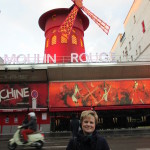
Moulin Rouge, where Henri Toulouse-Latrec found inspiration for his art.

Moulin Rouge, where Henri Toulouse-Lautrec found inspiration for his art.

Monday. My last day in Paris. I can’t believe a month has gone by already. I’m trying to savor every moment today. I’m pretty organized – I’ve reorganized my stuff enough times, I should be – so I went to buy that cute mug I saw in a shop nearby (with its own spoon!) and bought a few other small souvenirs. A guy who has a kiosk selling souvenirs at Blanche Metro had gone to his home country and came back, so I got to say good-bye to him. He asked me when I would be returning: I told him I didn’t know, but that my heart will always be here. He smiled in recognition.

I went to Champs-Elysees one last time, and took in the ambiance as much as I could. I don’t want to leave. I belong here. I wandered around taking pictures until I knew I couldn’t put it off any more. I walked to the Champs-Elysees Metro and took it for the last time to Blanche Metro. After I got off, I took some pictures of Moulin Rouge and met some travelers: one of them asked me if I wanted my picture taken. Sure! Then I walked up the Montmartre hill to Le Basilic and had dinner there again – another perfect French meal — and took a few pictures, saying my good-byes. Then I went back to Plug-Inn Hostel. I am thankful for my time here, and I’ve made a lot of connections with people, some of which I’ve forgotten to write about in my journal: my long-term memory is so much better than my short-term, that sometimes I remember things better 6 months to a year later than I did right after an experience. I still have more to say about my trip. Well, that’s something. Maybe I can even blog about it.


Salut.