Following the tragic terrorist attacks of November 13th in Paris, France, About Travel offers specific information and advice for tourists and visitors.
Source: Terrorist Attacks in Paris: What Visitors Need to Know

The Eiffel Tower is lit in France’s flag colors of blue, white and red in memory of those slain on Friday, November 13, 2015.
Here is some information and advice from About Travel about traveling to Paris at the present time. I have summarized some points and copied other points in their entirety. If you have any questions about traveling to Paris, please complete my “Contact Elsa” form, and I will get back to you as soon as possible.
The Attacks: Main Facts
Summarizes the where and when of the attacks, police raids and investigation. Most of the attacks occurred in the 10th and 11th arroundissements, not far from the Charlie Hebdo offices.
The Aftermath in Paris: Shock and Mourning
French President Francois Hollande issued a statement in which he called the attacks “an act of absolute barbarism” and promised that “France will be ruthless in its response to [ISIS].”
But he also called for national unity and for “cool heads,” warning against intolerance or divisiveness following the attacks.
In addition, he designated three days of national mourning, so all city and state museums, schools, and public places were closed over the weekend following the attacks.
Tributes, Memorials & City Initiatives
From Monday, November 16 through Wednesday, November 18 the Eiffel Tower will be illuminated with the colors of the French flag — blue, white and red — in memory of the victims.
The city’s Latin motto “Fluctuat Nec Mergitur” — which translates to “Tossed, But Not Sunk” — is on banners all around the city, including the Eiffel Tower.
-
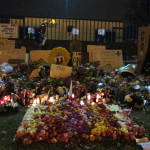
- A memorial for the victims of last Friday’s attacks has sprung up at the French Embassy in D.C.
-
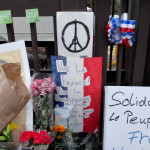
- Detail of the memorial at the French Embassy in D.C.
-
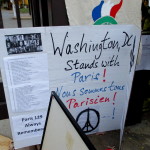
- Detail of the memorial at the French Embassy in D.C.
-
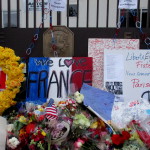
- Detail of the memorial at the French Embassy in D.C.
-
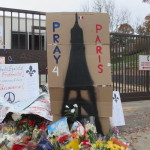
- A sign asks passersby to Pray for Paris at the memorial at the French Embassy in D.C.
-

- Detail of the memorial at the French Embassy in D.C.
-
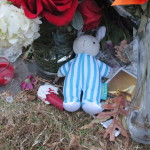
- A mourner left a rabbit among the flowers, candles, and signs.
-
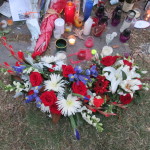
- Blue, white and red flowers adorn the memorial at the French Embassy in D.C.
Getting In and Out of Paris/France
France’s borders have not been closed. Security has been tightened at airports, train stations, and ferry launch points, so expect significant delays.
Companies including Eurostar, EasyJet, Ryanair, Air France, and British Airways have offered free exchanges on tickets for travelers who elected not to travel to or from Paris on the day following the attacks. Call their helplines for more information.
Metro and Public Transportation
All metro, bus, and RER lines in Paris are currently running normally, with the exception of the Oberkampf metro station (line 5) which is closed, and the station St Denis (line 13), closed for security reasons due to a police raid underway in the suburb.
Closures Around the City and Bolstered Security Measures
During the weekend following the attacks, all city and state-run museums and cultural attractions, including the Louvre, the Palace at Versailles, and the Eiffel Tower, were closed for three days of national mourning.
The Eiffel Tower is again open on Wednesday the 18th of November, after closing for security reasons on Tuesday.
On Wednesday, November 18th, all municipal and state museums and monuments were re-opened, except for the Arc de Triomphe which has not yet announced a re-opening date.
Disneyland Paris also re-opened its doors on Wednesday after a four-day closure. The Versailles palace re-opened on Tuesday, November 17th under tightened security.
Other public city events, including the annual Christmas markets and holiday lights ceremonies, were canceled in the week after the attacks. The holiday markets, including the biggest on the Champs-Elysees, were mostly open as of Wednesday, November 18th. The lit ferris wheel at the Place de la Concorde is also now open.
However, holiday lights ceremonies were postponed or cancelled around the city in the week after the attacks, including the largest lights display scheduled to kick off on the Champs Elysees, which has been postponed until further notice. Check back for updates on whether those will go forward.
In addition, many stores, shops, restaurants and bars across the capital were closed over the weekend following the attacks, in observance of national mourning. These private businesses have been re-opening at their owners’ discretion. Call ahead to verify re-opening dates and times.
For more information on current closures and re-openings of popular attractions, monuments, and museums, see this page at the Paris Tourist Office.
Official Security Advisories
As this went to press, no advisories against visiting Paris or the rest of France have been issued by the embassies and consulates of English-speaking countries. However, they do advise caution and vigilance.
The American Embassy in Paris published the following advisory to U.S. nationals visiting France on their official website: ” We strongly urge U.S. citizens to maintain a high level of vigilance, be aware of local events, and take the appropriate steps to bolster their personal security, including limiting their movements to essential activity. U.S. citizens are encouraged to monitor media and local information sources and factor updated information into personal travel plans and activities.” You can read the rest of their advice, including on how to register with the Embassy during your stay (recommended), at their official website.
To find your own embassy or consulate and any safety advisories published there, see this page.
Is it Safe to Visit Paris? Should I Cancel my Trip?
Personal safety is a highly, well, personal issue, and I can’t offer any hard-and-fast advice on what nervous or anxious travelers should do. It’s entirely normal to feel some apprehension after these events. Consider these points before canceling your trip to Paris.
Security is probably at its highest ever at the moment.
Despite what you might be reading or seeing on certain cable news outlets, France does take security very seriously, and officials have successfully intercepted and foiled many attacks in the past.
Moreover, following this recent tragedy, Paris is being patrolled by unprecedented numbers of police and military personnel, especially in crowded areas, public transport, and places frequented by tourists, including monuments, museums, markets and large shopping centers. Your risks are probably lower than usual due to these heightened precautions. While government officials acknowledge that more attacks are possible, they are showing extreme vigilance and working their very best to protect the city, its residents, and its visitors.
Read related: How to Stay Safe in Paris: Top Tips
[Elsa’s Note: With the exception of the section included here, all others are a refresher, such as protect yourself against pickpockets.] Especially when traveling alone, avoid areas around metro Les Halles, Chatelet, Gare du Nord and Stalingrad late at night or when the streets appear less than crowded. While generally safe, these areas have at times been known to harbor gang activity or to be the site of hate crimes. In addition, avoid traveling to the Northern Paris suburbs of Saint-Denis, Aubervilliers, Saint-Ouen, etc. after dark. Visitors to the above-mentioned areas may also take precautions by keeping a low profile and by refraining from wearing highly visible jewelry or clothing that identify them as members of a religion or political movement. As this goes to press, antisemitic and other hate crimes have been on the rise in the Paris region, but have largely been perpetrated outside the city walls.
We live in a world of complex risks, and we take those risks constantly.
Just as you can’t guarantee that getting in your car for your morning commute to work won’t result in a car crash, or that you won’t be a victim of random gun violence at a supermarket, travel carries a degree of risk. The rather sobering truth is that terrorism knows few to no borders in our age: to fear Paris over any other major metropolis is to completely misunderstand how terrorists operate.
Life in Paris must go on…and without your help, it won’t.
Paris is the number-one tourist destination in the world. The city needs, above all, to heal and rebound from this terrible tragedy, but without the help of tourists who contribute largely to its economic health and vibrancy, it’s not likely to succeed.
Vive la France. 
Image of Eiffel Tower lit up in blue, white and red by Yann Caradec, Flickr, CCBY 2.0. Images of Memorial at French Embassy by Elsa L. Fridl. “Peace for Paris” by Jackman Chlu, Flickr, CCBY 2.0.
Material adapted from an About Travel email dated November 17, 2015. No copyright infringement is intended. The author only means to share important safety information with travelers.